


Suporich Co., Ltd.
Business outline
Providing IT training services, employment support services, and recruitment services for foreign human resources
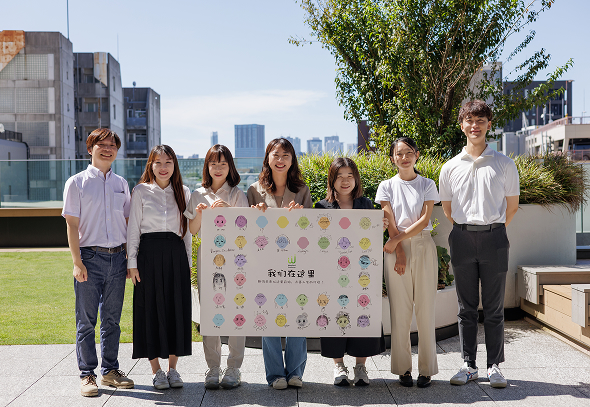
Company keywords
- Developing employment support services specializing in foreign human resources aiming for employment in Japan
- Building systems that reflect feedback from employees, such as program for teleworking from one's mother country, without being bound by the norms of Japanese companies
- An environment where employees can acquire the skills necessary for their goals, including avenues such as our program for internal job transfers
Company overview
While the number of international students studying in Japan is increasing, their employment rate is significantly lower than that of Japanese students. Against that backdrop, Suporich was established to support such foreign human resources who want to work in Japan but have not yet been able to do so. The first service the company worked on was an IT training service. Representative Director and CEO YinLing LEE commented: “It takes time to master Japanese, but we thought that having other strengths such as other various qualifications would be advantageous for employment, so we focused on the IT industry, where there is a severe labor shortage.” Starting with an IT training business, the company subsequently expanded to employment support and recruitment. Suporich provides comprehensive support for the job hunting activities of foreign human resources based on Japanese-specific customs, such as diverse recruitment media, hiring methods, and manners during applications and interviews.
To act as a bridge between foreign human resources and Japanese companies, not only proficiency in both languages but also an understanding of both cultures is essential. Therefore, Suporich has been actively promoting the recruitment of foreign human resources since its founding. ZhiFei GAO, who is an employee from China, was originally a user of the service. When she learned Japanese as an elective subject in university, she became interested in life in Japan as she learned broadly about the country—not just the language. After working as an engineer at a major IT company in China, she started her long-awaited life in Japan after the COVID-19 pandemic. Thinking she wanted to work in Japan after graduating from Japanese language school, she contacted Suporich. A few months later, she was scouted by Lee, who sensed potential in Gao’s logical responses. “I was surprised because it was unexpected, but I felt a great appeal in a job where I could be useful to foreign human resources who want to work in Japan just like me,” said Gao.

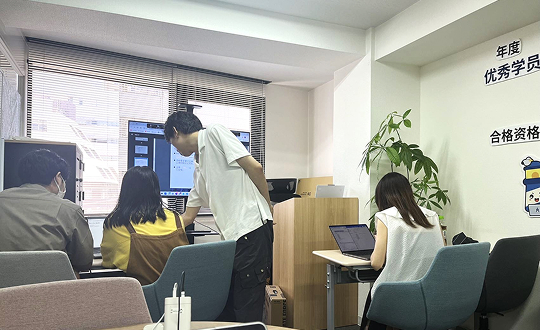
Work-life balance initiatives
More than half of Suporich’s employees are foreign nationals, and Lee is also from China. Therefore, the company has been working to realize a work-life balance that matches the actual situation of employees without being bound by the customs of Japanese companies. One example is the company's program for teleworking from one's mother country. Introduced so that foreign employees can spend as much time as possible with their families, the system increases the number of available days according to seniority, with five days in the first year and seven days in the second year. Gao also commented: “I was happy to be able to spend a long time with my family during the Lunar New Year.” Furthermore, Suporich has established a system where paid leave can be taken from the first day, in preparation for sudden illness or urgent business, immediately after joining the company.
Another characteristic of Suporich is its mindset to reflect feedback from employees in company systems. For example, in response to Gao’s opinion that “it is too late if achieving sales targets is reflected in salary or evaluation months later,” the company immediately introduced a system to grant “rewards” such as dinners, gifts, or days off in the month following the achievement, depending on the degree of achievement. Furthermore, the frequency of internal social gatherings is also adjusted based on employee feedback. “Communication among employees is important, but some employees feel that it is a burden if there are too many events. We listen to each opinion and try to find a balance where everyone can enjoy themselves comfortably,” said Lee.


Human resource development initiatives
“The saddest state is having a goal but not the power to realize it,” added Lee. Conducting careful one-on-one training in parallel with work for the first one or two months after joining is also based on the desire for employees to firmly acquire the skills to challenge what they want to do. Gao, who switched from engineer to sales, also commented: “Actually, I had long felt the appeal of sales jobs where I could realize results with numbers rather than technical jobs.” On reflection, she said: “When I was in trouble, my seniors helped me immediately, so I felt at ease even though I was inexperienced.” In addition, during training, learning is consolidated by confirming the content to be learned that day at the start of work and setting up a place to announce what was learned at the end of work.
Furthermore, under the company's program for internal job transfers, it is possible to change job categories according to one’s wishes. Since the company is a small organization, the impact of transfers is significant, but the entire company adjusts operations to accommodate it. “Most people who leave their home country to work in Japan are seeking some kind of ‘change.’ We want to support their desire to challenge themselves in various ways,” said Lee. Gao also mentioned her goal: “Currently, I am in individual sales for students, but in the future, I want to take on the challenge of corporate sales.”
Even if employees find another dream and leave the company, the stance of supporting that employee’s challenge does not change. “I want them to be proud of having worked at Suporich and to challenge themselves boldly on their new path,” said Lee.


Message from our top executive
Representative Director and CEO / YinLing Li
In the future, while strengthening recruitment services, we will also fully expand consulting services for companies facing challenges in accepting foreign human resources.
Tokyo is a city with a comfortable sense of distance between people, and it is easy to live in. For those who will work in Tokyo from now on, I hope that you will play an active role by daring to make your differences your strength, rather than aiming to become the same as Japanese people.


Message from foreign talent
Individual Sales / ZhiFei Gao(China)
I used to be on the side of being taught by seniors, but now I am in a position to instruct juniors. It is difficult to teach people with different personalities and ways of thinking, and it is a constant cycle of trial & error, but new challenges are a daily stimulus.
Tokyo’s appeal lies in its ease of getting along with people of various nationalities. There are also various opportunities in terms of careers, so please actively give what you want to do a try.


Corporate information
- Name of company
- Suporich Co., Ltd.
- Date of establishment
- November 15, 2021
- Capitalization
- 5 million yen
- Representative
- YinLing LEE
- Number of employees
- 10 (of which 8 are foreign employees)
- Headquarters location
- DaiyaGate Ikebukuro 5F, 1-16-15 Minami-Ikebukuro, Toshima-ku, Tokyo, Japan
- Telephone number
- 03-5985-6220
- URL
- https://www.suporich.com/#/
* All information is current as of December 2025.